%20--%3e%3csvg%20version='1.1'%20id='Layer_1'%20xmlns='http://www.w3.org/2000/svg'%20xmlns:xlink='http://www.w3.org/1999/xlink'%20x='0px'%20y='0px'%20viewBox='0%200%20546.4%2051'%20style='enable-background:new%200%200%20546.4%2051;'%20xml:space='preserve'%3e%3cstyle%20type='text/css'%3e%20.st0{fill:%23172A80;}%20.st1{fill-rule:evenodd;clip-rule:evenodd;fill:%23F5A623;}%20%3c/style%3e%3cg%3e%3cpath%20class='st0'%20d='M14.9,9.1H0V1.2h38.4v7.8H23.5v40.7h-8.6V9.1z'/%3e%3cpath%20class='st0'%20d='M53,1.2h7.5l20.9,48.5h-9.9L67,38.7H45.9l-4.4,11.1h-9.7L53,1.2z%20M64,31.3l-7.5-19.7l-7.6,19.7H64z'/%3e%3cpath%20class='st0'%20d='M86.1,1.2h11.5l23.5,36.1h0.1V1.2h8.6v48.5h-11l-24-37.2h-0.1v37.2h-8.6V1.2z'/%3e%3cpath%20class='st0'%20d='M183.2,46.2c-6,3.2-12.7,4.8-20.1,4.8c-3.7,0-7.2-0.6-10.3-1.8c-3.1-1.2-5.8-2.9-8.1-5.1c-2.3-2.2-4-4.9-5.3-8%20c-1.3-3.1-1.9-6.6-1.9-10.4c0-3.9,0.6-7.4,1.9-10.6c1.3-3.2,3.1-5.9,5.3-8.1c2.3-2.2,5-4,8.1-5.2c3.1-1.2,6.6-1.8,10.3-1.8%20c3.7,0,7.2,0.4,10.4,1.3c3.2,0.9,6.1,2.5,8.7,4.8l-6.4,6.4c-1.6-1.5-3.4-2.7-5.7-3.5c-2.2-0.8-4.6-1.2-7-1.2%20c-2.5,0-4.8,0.4-6.8,1.3c-2,0.9-3.8,2.1-5.2,3.7c-1.5,1.6-2.6,3.4-3.4,5.5c-0.8,2.1-1.2,4.4-1.2,6.8c0,2.6,0.4,5,1.2,7.2%20c0.8,2.2,1.9,4.1,3.4,5.7c1.5,1.6,3.2,2.9,5.2,3.8c2,0.9,4.3,1.4,6.8,1.4c2.2,0,4.3-0.2,6.2-0.6c1.9-0.4,3.7-1.1,5.2-1.9V29.2h-9.9%20v-7.8h18.6V46.2z'/%3e%3cpath%20class='st0'%20d='M190.1,25.7c0-3.9,0.6-7.4,1.9-10.6c1.3-3.2,3.1-5.9,5.3-8.1c2.3-2.2,5-4,8.1-5.2C208.5,0.6,212,0,215.7,0%20c3.8,0,7.3,0.5,10.4,1.7s5.9,2.9,8.2,5.1c2.3,2.2,4.1,4.9,5.3,8.1c1.3,3.2,1.9,6.7,1.9,10.6c0,3.8-0.6,7.2-1.9,10.4%20c-1.3,3.1-3.1,5.8-5.3,8c-2.3,2.2-5,4-8.2,5.2s-6.6,1.9-10.4,2c-3.7,0-7.2-0.6-10.3-1.8c-3.1-1.2-5.8-2.9-8.1-5.1%20c-2.3-2.2-4-4.9-5.3-8C190.7,33,190.1,29.5,190.1,25.7z%20M199.1,25.2c0,2.6,0.4,5,1.2,7.2c0.8,2.2,1.9,4.1,3.4,5.7%20c1.5,1.6,3.2,2.9,5.2,3.8c2,0.9,4.3,1.4,6.8,1.4c2.5,0,4.8-0.5,6.9-1.4c2.1-0.9,3.8-2.2,5.3-3.8c1.5-1.6,2.6-3.5,3.4-5.7%20c0.8-2.2,1.2-4.6,1.2-7.2c0-2.4-0.4-4.7-1.2-6.8c-0.8-2.1-1.9-3.9-3.4-5.5c-1.5-1.6-3.2-2.8-5.3-3.7c-2.1-0.9-4.3-1.3-6.9-1.3%20c-2.5,0-4.8,0.4-6.8,1.3c-2,0.9-3.8,2.1-5.2,3.7c-1.5,1.6-2.6,3.4-3.4,5.5C199.5,20.5,199.1,22.7,199.1,25.2z'/%3e%3c/g%3e%3cg%3e%3cg%3e%3cpath%20class='st0'%20d='M268.8,1.2H301v7.8h-23.5V21h22.3v7.8h-22.3V42h24.8v7.8h-33.4V1.2z'/%3e%3cpath%20class='st0'%20d='M378.8,9.1h-14.9V1.2h38.4v7.8h-14.9v40.7h-8.6V9.1z'/%3e%3cpath%20class='st0'%20d='M407.5,1.2h32.2v7.8h-23.5V21h22.3v7.8h-22.3V42h24.8v7.8h-33.4V1.2z'/%3e%3cpath%20class='st0'%20d='M448.7,1.2h11.5l23.5,36.1h0.1V1.2h8.6v48.5h-11l-24-37.2h-0.1v37.2h-8.6V1.2z'/%3e%3cpath%20class='st0'%20d='M502.6,1.2h19.1c3.2,0,6.3,0.5,9.3,1.5c3,1,5.6,2.5,7.9,4.5c2.3,2,4.1,4.5,5.5,7.6c1.4,3,2.1,6.6,2.1,10.7%20c0,4.2-0.8,7.8-2.4,10.8c-1.6,3-3.6,5.6-6.1,7.5c-2.5,2-5.3,3.5-8.3,4.5c-3,1-6,1.5-8.9,1.5h-18.1V1.2z%20M517.7,42%20c2.7,0,5.2-0.3,7.6-0.9c2.4-0.6,4.5-1.6,6.3-2.9c1.8-1.3,3.2-3,4.2-5.1c1-2.1,1.5-4.6,1.5-7.6c0-2.9-0.5-5.4-1.4-7.5%20c-0.9-2.1-2.2-3.8-3.8-5.1c-1.6-1.3-3.5-2.3-5.8-2.9c-2.2-0.6-4.7-0.9-7.3-0.9h-7.9V42H517.7z'/%3e%3c/g%3e%3cg%3e%3cpolygon%20class='st0'%20points='348.8,1.3%20338.5,17%20328.3,1.3%20315.8,1.3%20332.1,25.1%20315.1,49.8%20327.3,49.8%20338.2,33.2%20349.1,49.8%20361.6,49.8%20344.7,25%20360.9,1.3%20'/%3e%3cg%3e%3cpolygon%20class='st1'%20points='306.4,1.2%20322,25%20305.4,49.9%20310.2,49.9%20327,25%20311.2,1.2%20'/%3e%3c/g%3e%3c/g%3e%3c/g%3e%3c/svg%3e)
2025 Year in Review: Native Mobile UC Takes Center Stage
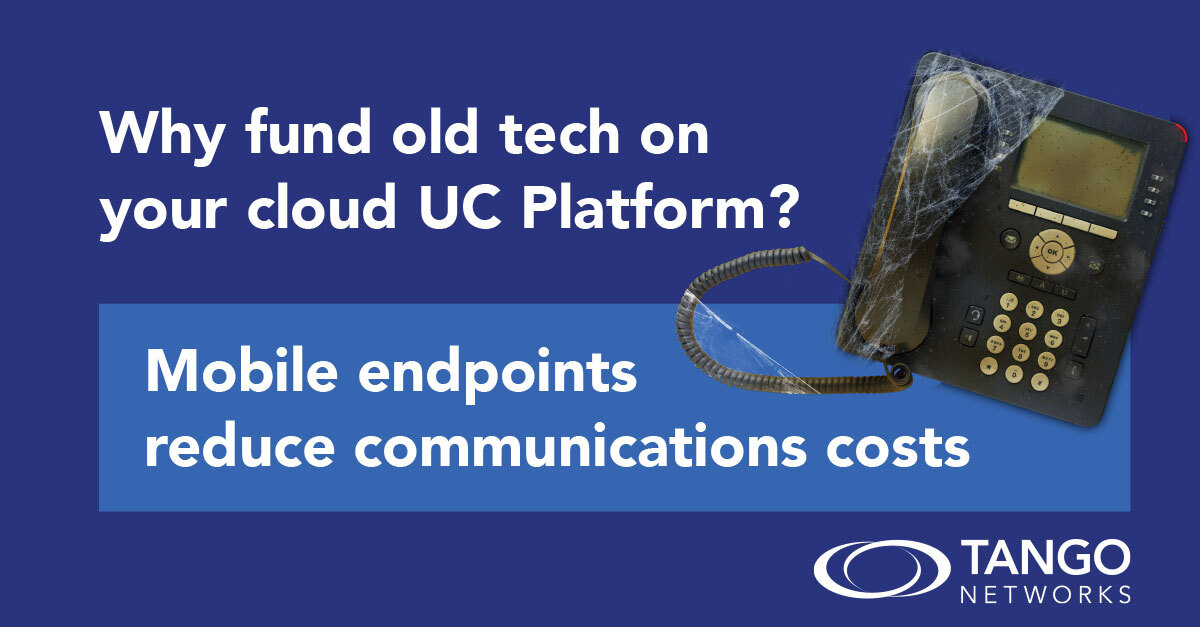
The year 2025 will be remembered as the tipping point when native mobile Unified Communications (UC) finally began to replace the traditional business desk phone. Analysts reported that most businesses now consider desk phones too inflexible and obsolete for modern work. As working environments evolve and mobile devices become ubiquitous, native mobile UC has emerged as the most cost-effective and relevant path forward.
Coinciding with the 20th anniversary of Tango Networks, our Tango Extend solution was at the heart of this shift. Below are the key achievements that defined the year and why they matter for IT managers, distributed workforces, and the bottom line.
Why 2025 Was the “Tipping Point” for Desk Phone Replacement
If previous years proved work can happen anywhere, 2025 was the year enterprises treated mobility as the default, not the exception. The old approach—using desk phones for “real” business and mobile phones as an afterthought—no longer matches modern workflows:
Financial & Environmental Waste: Hybrid schedules leave many desk phones unused, yet they continue to incur costs and consume carbon throughout their lifecycle.
The Frontline Gap: Field employees often lack the business identity, routing, and policy controls that desk users take for granted.
App Friction: Over-the-top calling apps often fail because they add complexity just when a user needs speed and simplicity.
Native mobile UC solves this by embedding a business identity directly into the phone’s native dialer via eSIM technology. Business calls finally behave like business calls, everywhere.
Market Recognition and Ecosystem Growth
Following recognition from Frost & Sullivan, 2025 provided fresh validation for the end of the desk phone era. Frost & Sullivan highlighted how Tango Extend allows organizations to mobile-enable employees without “ripping and replacing” existing UC platforms.

Key ecosystem milestones included:
Microsoft Teams Integration: Highlighted by industry expert Jonathan Edwards (The Bearded 365 Guy), Tango Extend enables a Teams business number to live natively on a mobile device via eSIM. This allows users to place calls through the standard dialer rather than a clunky app, eliminating the adoption gap.
Cisco Webex Expansion: Cisco partners in the Cloud Connect program gained a new way to deliver mobile UC to over 16 million Webex Calling users, bringing the native dialer experience to a massive installed base.
A Growing Partner Network: New partners like CallTower, Clarify Voice, and Affiliated Tech are now helping customers deploy mobile UC through trusted, managed services.
Quantifiable Benefits: Savings, Compliance, and AI

Throughout 2025,UC Today published deep dives into the tangible value of a mobile-first strategy:
Cost & Sustainability: Companies achieved significant savings by retiring desk phones and corporate-issued handsets. Reducing hardware also means less e-waste and a smaller carbon footprint.
Trust and Professionalism: Calling customers from personal numbers reduces answer rates. A consistent business identity in the native dialer improves the customer experience.
Closing the Compliance Blind Spot: Traditionally, mobile calls were outside IT’s scope, leading to heavy fines in sectors like financial services for failing to record communications. Tango Extend solves this by routing mobile traffic through corporate systems, allowing IT to exercise direct control, monitoring, and archiving for the first time.
Global Reach and Technical Evolution

In 2025, we expanded our global footprint to include Switzerland and the Netherlands with 5G support. For multinational teams, this simplifies rollouts and reduces the need for expensive, country-by-country contracts.We also introduced the International Day Pass to eliminate “bill shock” from roaming charges in 39 countries.
Beyond mobile, Tango Extend-powered solutions expanded to include POTS (Plain Old Telephone Service) replacement, helping organizations modernize legacy connectivity as carriers retire traditional copper lines.
Looking Ahead: AI and the Next Wave
The hype surrounding AI became a reality for mobile UC in 2025. Historically, call analytics were limited to desk phone data. By extending these capabilities to mobile via eSIM, enterprises now have a richer picture of customer interactions and performance opportunities. Modern AI tools can finally operate on the full communication reality.
As we look beyond our 20th anniversary, the direction is clear: the workforce wants simplicity, and the enterprise needs control. In 2025, native mobile UC stopped being an “emerging” trend—it became the obvious next step.
Ready to make 2026 the year your workforce goes mobile-first? Get in touch today.
Better Business · One Voice
How many separate mobile invoices does your business process each month?
Most businesses have a patchwork of mobile contracts — corporate devices on one carrier, BYOD allowances paid as expenses, field workers on personal plans claimed back. Finance has no visibility, no forecast and no leverage. Tango Extend replaces that with a single subscription line that Finance can budget, audit and control.